
How The Information Equity Initiative is Building Access Beyond Connectivity
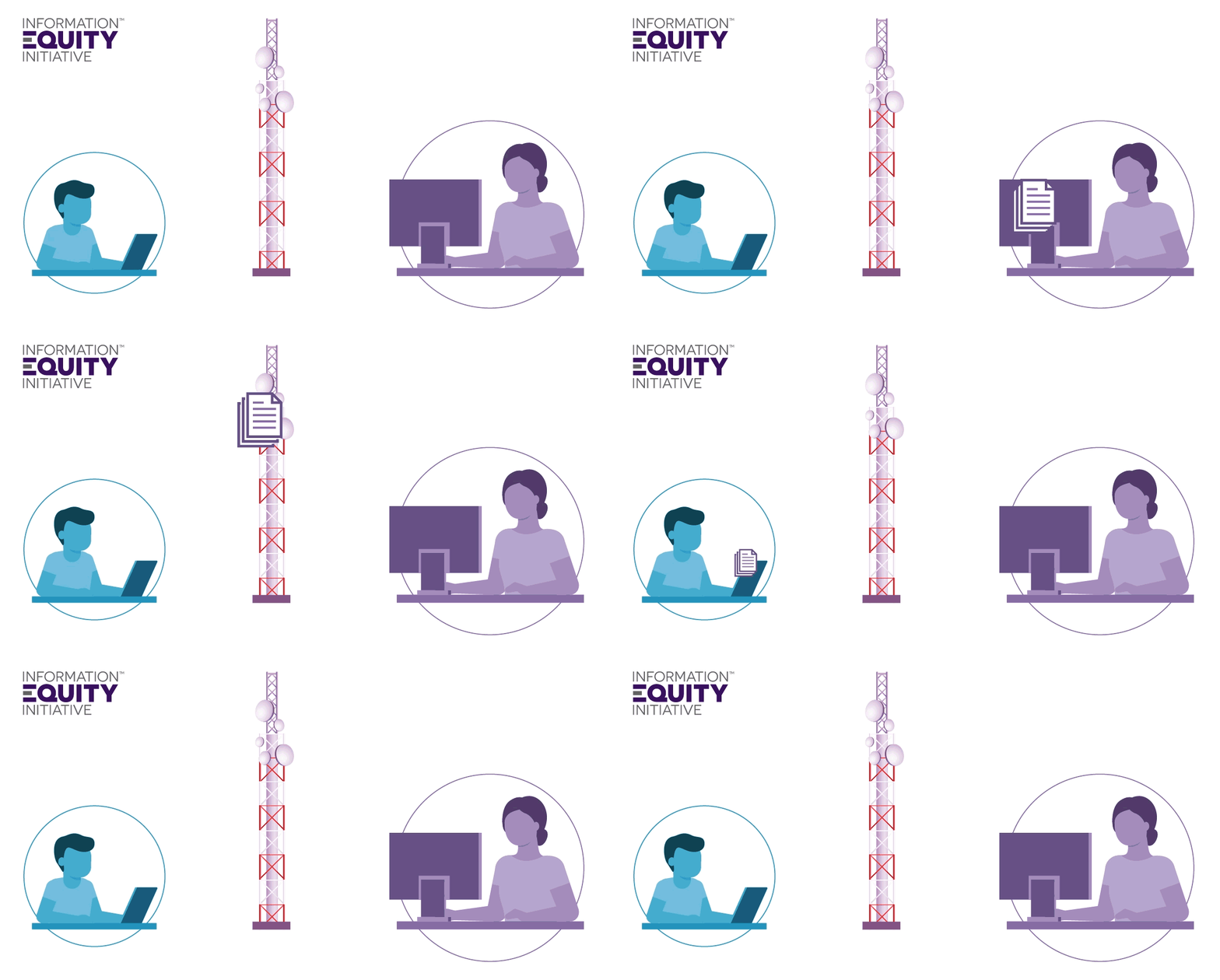
Access to information shapes nearly every part of modern life, from education and healthcare to employment and civic participation. But for millions of people, reliable internet access is still not guaranteed. In many communities, especially those with limited infrastructure or unstable connectivity, access to critical information can depend entirely on where someone lives, what resources they have, or whether they can get online at all.
The Information Equity Initiative (IEI) was founded to help close this gap. IEI is a nonprofit organization focused on closing the digital divide by making critical information accessible in low-connectivity and offline environments.
Founded in 2021 by three PBS member organizations during the COVID-19 pandemic, IEI was created after communities saw students fall behind simply because they lacked internet access at home. What began as an emergency education response evolved into a broader mission to ensure equitable access to digital information anywhere. Today, IEI develops solutions that deliver educational, healthcare, and public-interest content without requiring reliable internet access, supporting schools, healthcare centers, correctional facilities, and underserved communities across the U.S. and beyond.
We recently sat down with Naiara Azpiri, Co-Founder and CEO of IEI, and Megan Setler, VP of Operations, to discuss the realities of information inequity and what it takes to build systems designed for everyone.
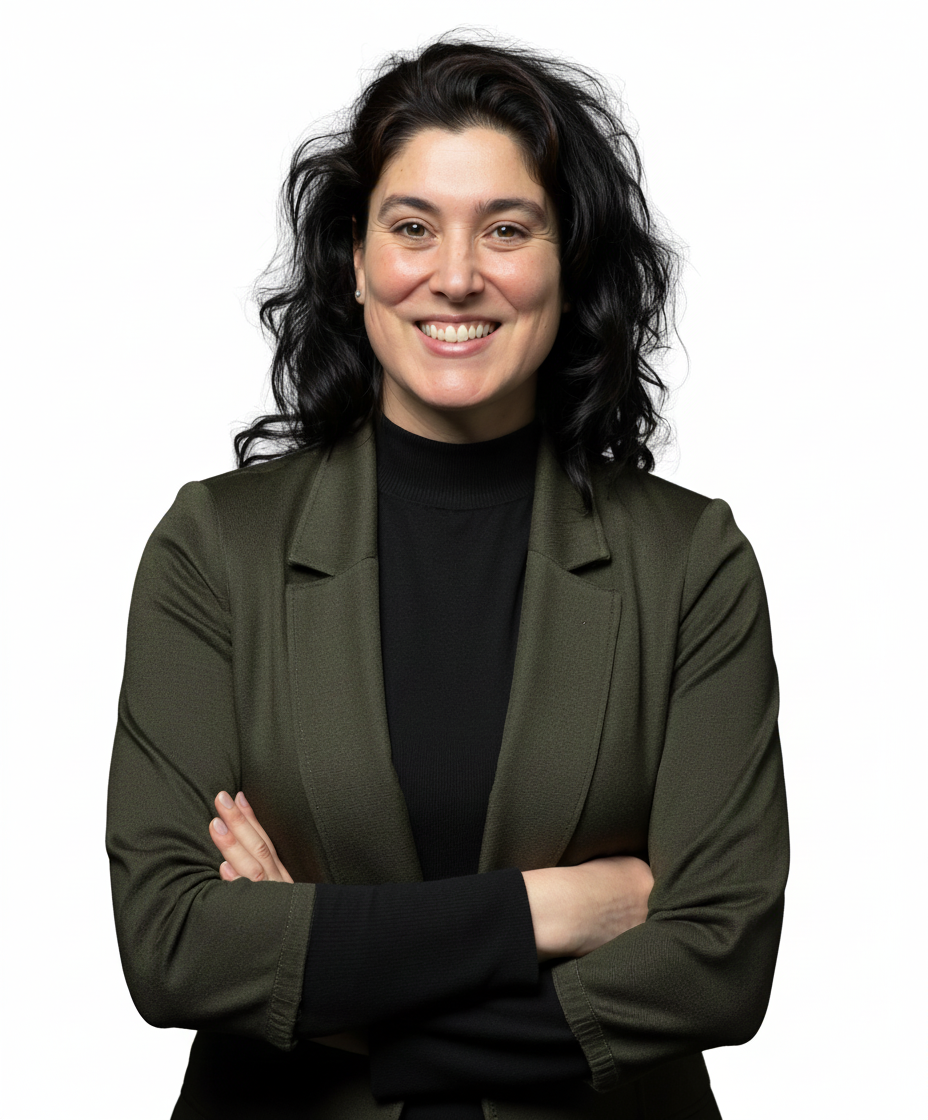
“Access to the right information can be transformative. It can improve educational outcomes, healthcare outcomes, confidence, opportunity—everything.”
- Naiara Azpiri
Co-Founder and CEO, IEI

“Making information accessible helps bridge the learning gap so that students without internet at home can keep pace with all of the other students.
- Megan Setler
VP Operations, IEI
What's a moment that made information equity personal for you?
Naiara: The pandemic made the problem impossible to ignore. We saw students who didn’t have internet at home falling further and further behind almost immediately.
That became the catalyst for our first education-focused projects. We started using datacasting technology through broadcast television infrastructure to deliver educational content directly to students at home — even without broadband internet access.
We realized very quickly that internet access shouldn’t determine whether someone can access quality information or educational opportunities. So what started in education eventually expanded into healthcare and correctional facilities, where we were seeing many of the same connectivity challenges in different forms.
Can you walk me through what a typical day looks like for someone your programs serve? What changes for them because of IEI's work?
Megan: It really depends on the community we’re serving.
For a student, it might mean being able to go home after school and still access assignments and learning materials, even without internet at home. We help bridge that gap so they can keep pace with all of the other students.
In healthcare environments, we work with federally qualified health centers to help patients access things like maternal health information or public health content in low-connectivity settings.
And in correctional facilities, where internet access is often heavily restricted, we help deliver educational content, life-skills training, and job readiness resources that otherwise wouldn’t be accessible. Providing access to these tools helps individuals build skills, prepare for reentry, and create stronger opportunities for success after leaving the facility.
Across all of those environments, the common thread is making sure people can still access critical information when traditional internet infrastructure falls short.
What's a barrier to information access that would surprise most people?
Naiara: I think what surprises people most is that these problems exist so prominently in the US.
People tend to think about information inequity as something happening in developing regions, but there are information deserts everywhere—even in places people would never expect.
We see several communities across the US where families still lack reliable internet, adequate devices, or enough bandwidth to access modern digital tools. And sometimes it’s not even the fact that internet is unavailable. It could be that it’s just not strong or stable enough to actually support the kinds of content people need to access.
What role do partnerships play in your work? What’s made possible through collaboration that wouldn't have happened otherwise?
Naiara: Partnerships are central to everything we do. We originally started by working closely with broadcasting stations because they already knew their communities and understood the needs on the ground. They became incredibly important delivery partners for us.
As funding landscapes changed, we also started partnering more with nonprofits, healthcare organizations, educational institutions, and philanthropic funders.
Today, we think about our work in three categories: delivery partners, content partners, and funding partners. Our collaboration allows us to experiment with new technologies, expand into new environments, and continue adapting our systems and solutions to meet the challenges at hand.
Can you share a metric milestone or project you're especially proud of this year?
Megan: We are really excited about the launch of CacheWave, which is designed to help deliver content in very low-bandwidth environments. A lot of the communities we work with can’t wait for perfect broadband or future infrastructure solutions. We need systems that work now, with the connectivity that currently exists.
Naiara: We’ve also expanded our healthcare work across nearly 50 federally qualified health centers in Pennsylvania, including partnerships focused on providing maternal health resources and communicable disease education.
And honestly, hearing direct feedback from teachers and frontline users continues to be one of the most meaningful indicators that the work is making a difference. One of the teachers actually told us our platform was easier to use than any other LMS they had worked with before, which was a huge moment for us because we had always thought of ourselves as the companion system, not necessarily the primary platform.
What’s on the horizon for IEI in the next 12 months? What are you building toward?
Naiara: Right now, we’re really focused on expanding partnerships with content organizations since this is an efficient way for us to deliver more information to more people.
We’re also exploring opportunities in Sub-Saharan Africa and continuing to improve our analytics and content management systems.
One of the biggest technical challenges for us is figuring out how to better measure impact in offline environments. Traditional analytics tools don’t really work when there’s no return path, so we’re building systems that can better capture usage and engagement even in low-connectivity settings.
What's something about this work that keeps you up at night, and what keeps you going in the morning?
Naiara: Good information is incredibly important. What keeps me up at night is knowing how harmful misinformation, or simply lack of information, can be for people and communities.
But that’s also what keeps me motivated. When you work in this space, you realize how transformative access to the right information can be. It can improve educational outcomes, healthcare outcomes, confidence, opportunity — everything.
You start to see how much changes when people simply have access.
What's the most impactful thing readers of this post could do to support you and the mission of IEI?
Megan: Get the word out! Honestly, spreading awareness is huge.
The more people who understand that information inequity exists, and that it exists everywhere, the more opportunities there are for partnerships, funding, and collaboration.
A lot of the most impactful connections happen because someone hears about the work and realizes they know a community, organization, or challenge where these solutions could help.
To learn more or get involved visit https://informationequity.org/